
Criminal Court Cases in Moultrie County
Moultrie County felony, misdemeanor, DUI, traffic, and ordinance prosecutions are filed in the Circuit Court of the Sixth Judicial Circuit. Illinois does not send felony matters to a separate district court. Sullivan, Bethany, and Lovington do not maintain independent criminal-court databases. An arrest by a city officer can produce a county Circuit Court case once the State's Attorney files a charging document.
The Circuit Clerk keeps the judicial file at 10 South Main Street in Sullivan, Suite 7. The counter is open weekdays from 8:30 a.m. to 4:30 p.m.; call 217-728-4622 for a docket sheet, file inspection, copy, or certified disposition. Police reports and jail booking sheets remain with law enforcement.
The Sixth Judicial Circuit courthouse guide describes the court and its historic records.
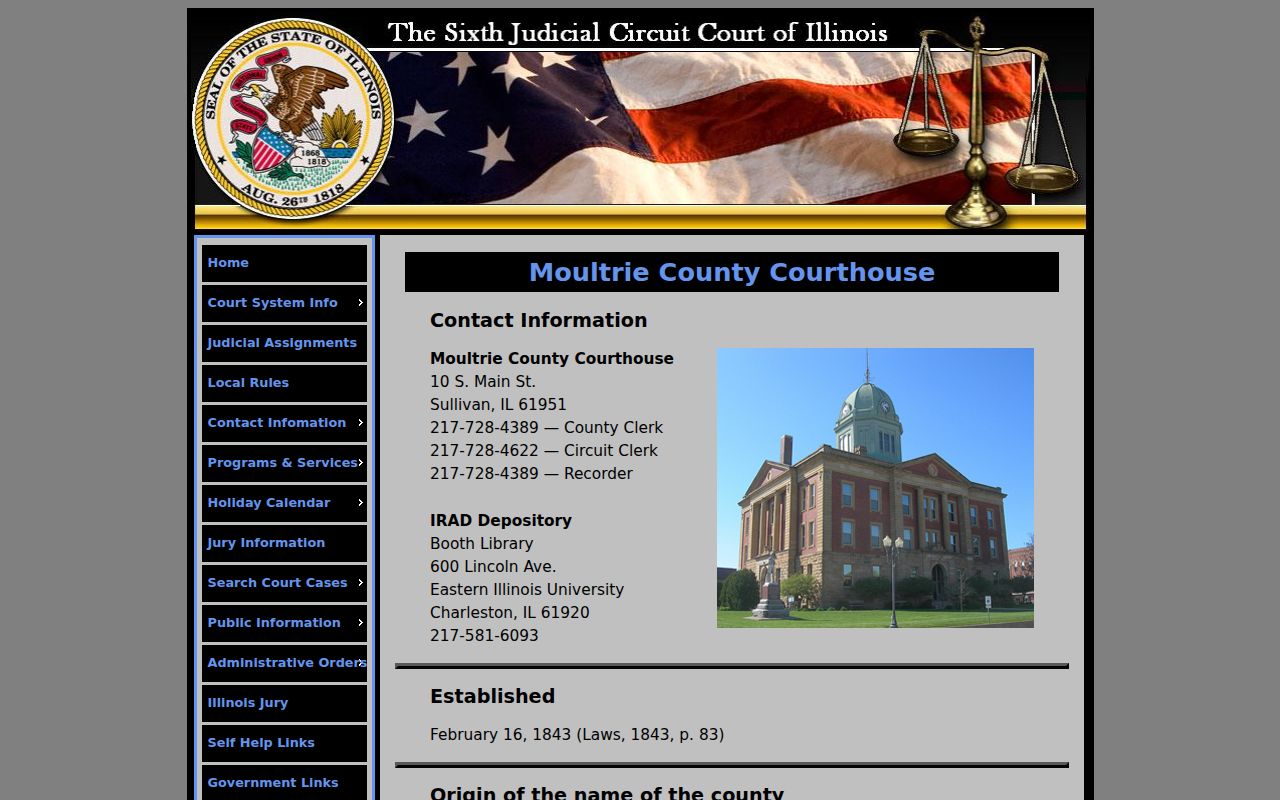
Its archival detail matters when a Moultrie County court case predates the modern online index.
Moultrie Court Cases Since 1990
The clerk routes cases beginning in 1990 to Judici. That date is an online coverage boundary, not the start of local court history. A missing older name does not prove no case existed. Earlier research may require clerk indexes, archived volumes, or historic judicial series. Documented record losses can also affect what survives.
The Moultrie Judici case search opens with the county court selected.
Use it for the online span, then contact the clerk for pre-1990 files or missing document images.
Moultrie County Case Record Searches
Start with a case number when known. It is more precise than a name and usually combines the filing year, case-type code, and sequence. For a name search, try careful spelling variants and verify results against dates and case details. Common names can produce false matches. Basic docket access is free, though some document or subscription functions may be gated.
- Open Judici and confirm Moultrie County is selected.
- Choose a name search or enter the exact case number.
- Narrow results by filing year and case type.
- Read each count through its latest disposition and sentence.
- Ask the Circuit Clerk for certified, archived, or unavailable documents.
| Field Label | Type | Required | Notes |
|---|---|---|---|
| Court | Dropdown | Yes | Moultrie Circuit Court may be preselected. |
| Last or business name | Text | For name search | Corroborate identity. |
| First and middle name | Text | No | Narrows common names. |
| Case number | Text | For exact search | Year, type, and sequence. |
| Case type and year | Select | No | Online coverage begins in 1990. |
The Judici participating-courts list confirms which Illinois counties use the service.
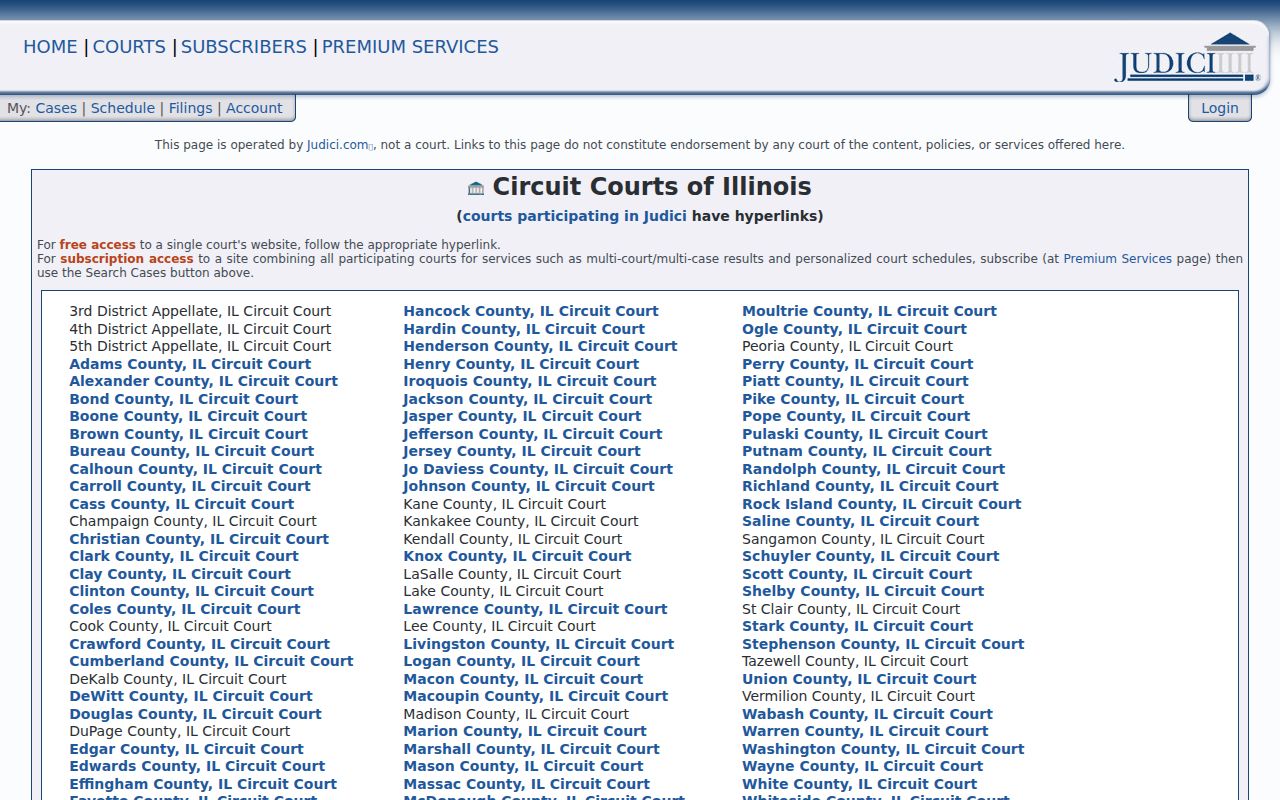
Moultrie's listing matters because Illinois lacks one complete statewide trial-court database.
Moultrie Criminal Case Codes
Case codes identify docket categories, not outcomes. CF generally marks felony criminal, CM misdemeanor criminal, DT DUI traffic, TR another traffic matter, and OV an ordinance matter. The displayed code should control because local variants exist. A CF label means the case was filed in that category. It does not prove conviction.
- Disposition
- The result for a case or count, such as dismissal, acquittal, or conviction.
- Docket entry
- A dated filing, hearing, order, plea, judgment, or later event.
- Capias
- A custody order that a later entry may show as served or quashed.
- Certified disposition
- A clerk-certified record of the court's final action.
Read the case number, count, and final event together. One arrest can lead to several counts, and those counts can end in different ways.
What a Criminal Case File Contains
A Moultrie County case view can show parties, filed charges, dated events, hearings, financial entries, and results. Read at count level. A complaint or information states allegations, not guilt. The original booking charge may differ from what prosecutors filed.
| Case Number & Court | Filing year, category, sequence, and court. |
|---|---|
| Charging Document | Counts filed by the prosecution. |
| Docket Entries | Appearances, orders, pleas, warrants, and judgments. |
| Hearing Dates | Published dates, times, and courtroom details. |
| Disposition & Judgment | The result for each count. |
| Sentence & Conditions | Custody, probation, supervision, fines, or terms. |
The Circuit Clerk fee schedule is the local starting point for copy costs.
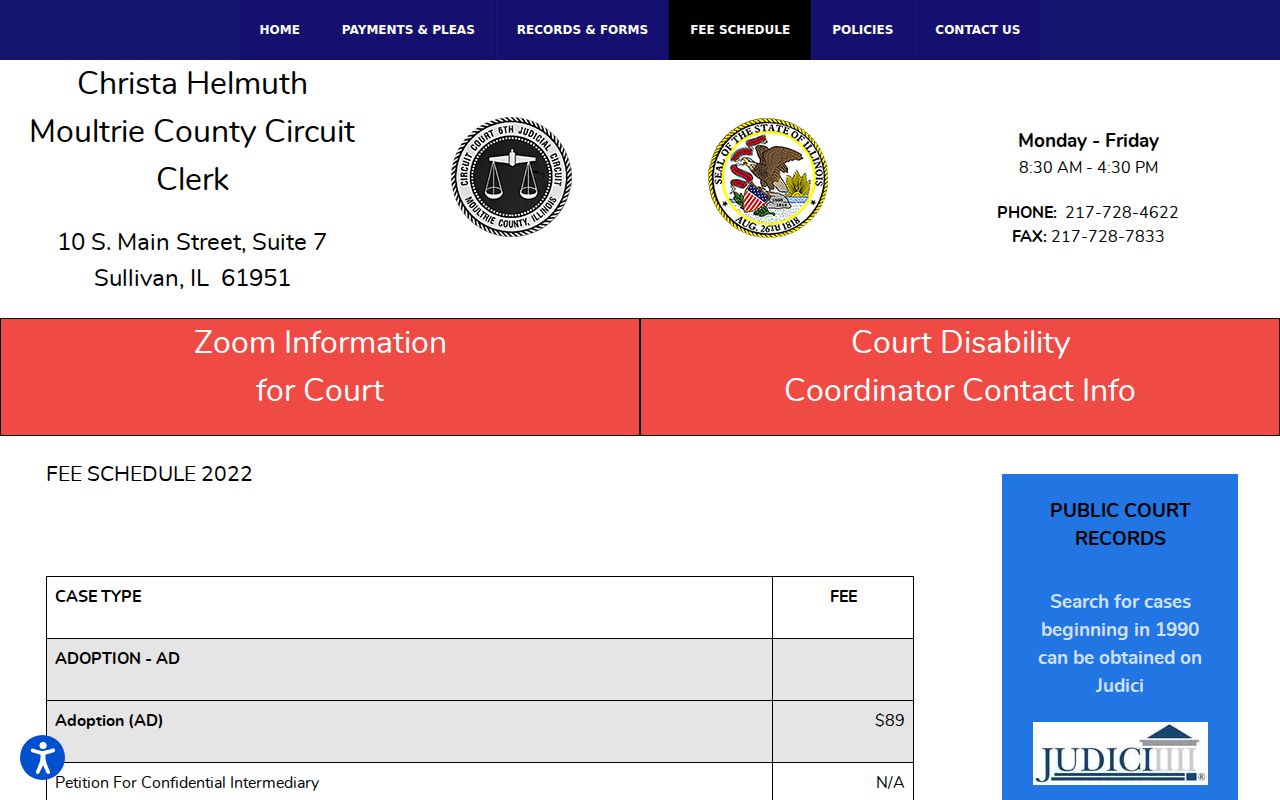
Ask for a quote because the $60 ISP processing line concerns an entered expungement or sealing order, not a routine search.
Moultrie Dockets Without Outcomes
A charge with no visible result may reflect delay, an open case, an unavailable image, or a result under another count. Read events by date. Check for amended charges, pleas, judgments, dismissals, sentences, and warrant recalls. Closed describes status but does not by itself mean conviction.
Give the clerk the exact case number when the result remains unclear. A certified disposition can support correction of an incomplete ISP transcript. ISP does not keep police narratives or witness statements, so request those from the investigating agency.
The Illinois Courts e-business directory shows the county-by-county system.
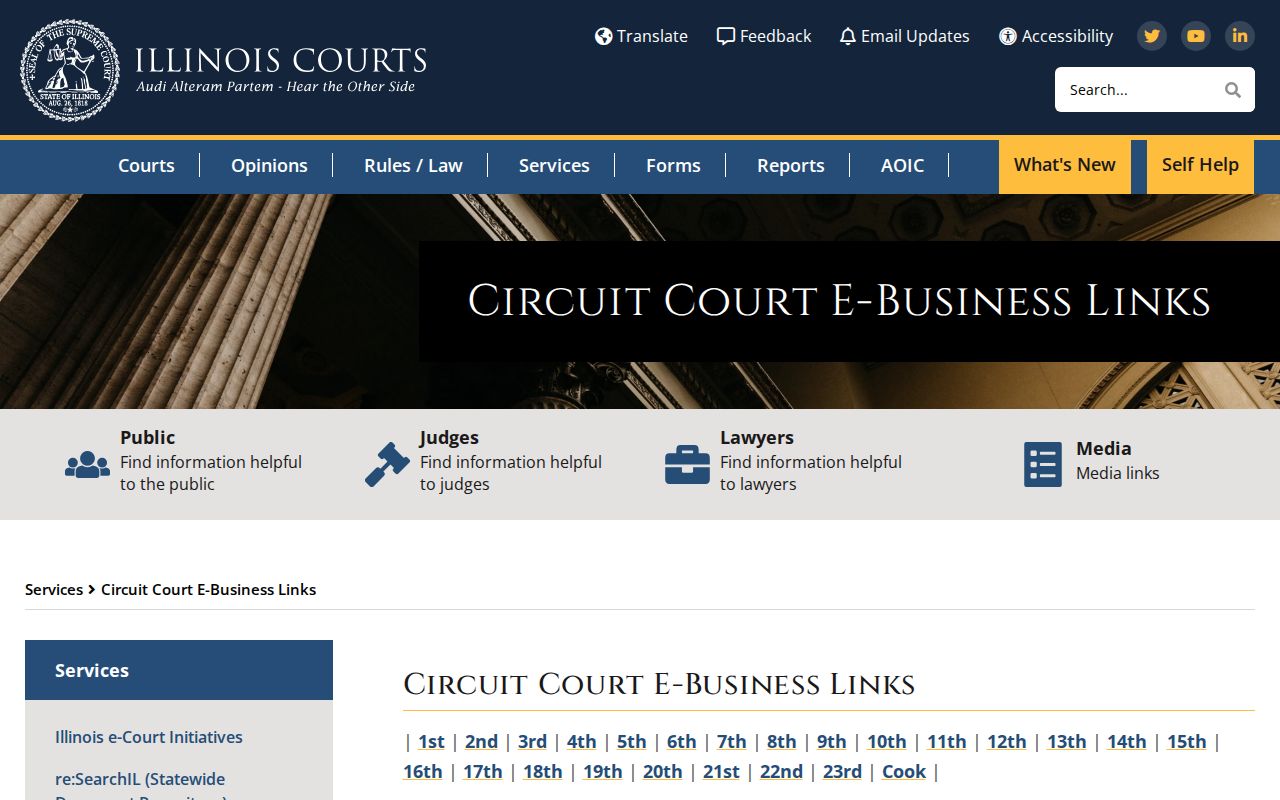
This explains why another county's search method may not work for Moultrie records.
Criminal Case Stages in Moultrie County
Police create an incident or arrest record. The jail may create a booking entry, but the court case starts only after a charge is filed. The judge handles first appearance, counsel, pretrial release or detention, motions, plea or trial, judgment, and sentence. Illinois ended cash bail, so current dockets center on release conditions and detention orders.
Case flow: Arrest › Booking › Charging decision › First appearance › Pretrial proceedings › Plea or trial › Disposition › Sentence
Not every arrest reaches each stage. Prosecutors may decline or amend charges, and courts may dismiss or acquit.
Moultrie State and Federal Cases
Most local prosecutions remain in Circuit Court. A separate federal prosecution belongs to the U.S. District Court for the Central District of Illinois and will not appear as a complete case in Judici. A state arrest does not automatically create a federal docket. Match the court on the filing before choosing a system.
PACER is the official federal docket service and requires registration.
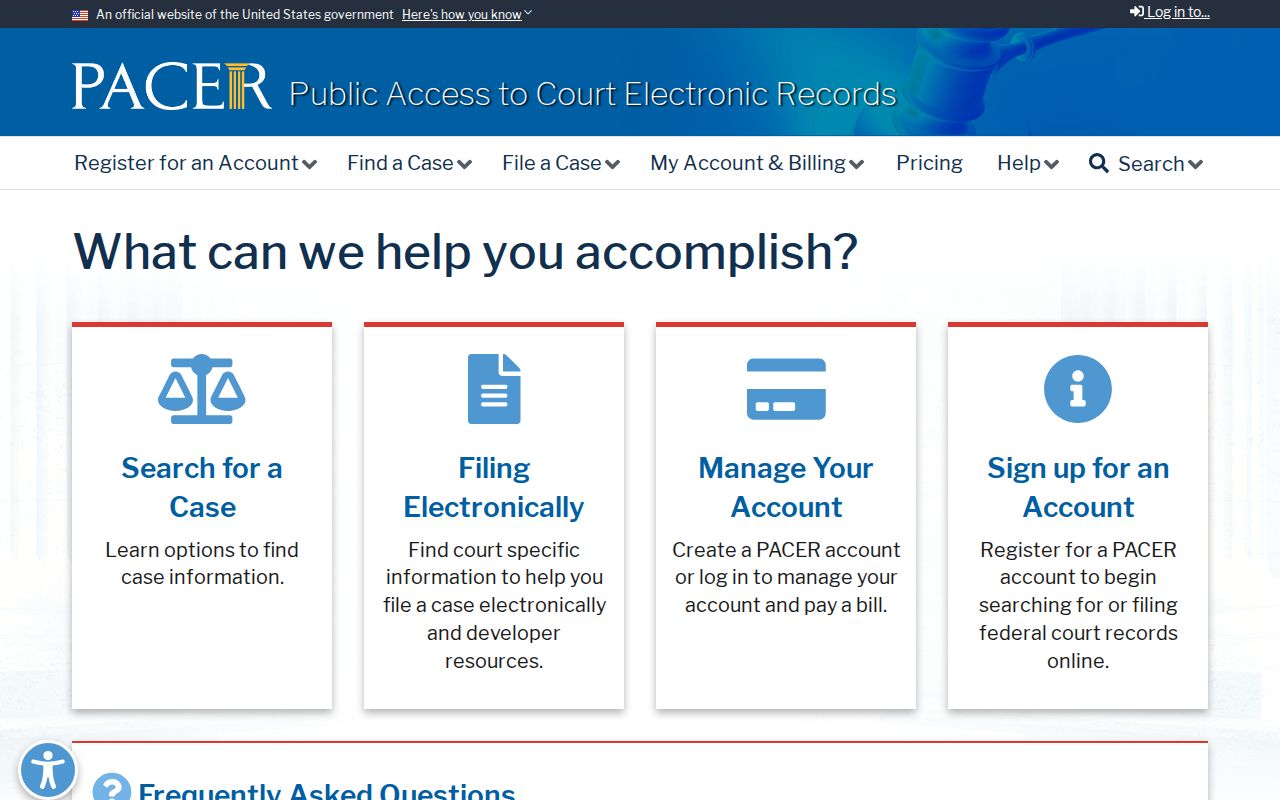
PACER applies only when a federal matter exists; Judici and the clerk remain the county sources.
Access Rules for Case Records
Sealed and expunged matters leave ordinary public inspection as the order and Illinois law require. Juvenile files have special confidentiality. Victim details, private identifiers, and safety-sensitive facts may be restricted. FOIA is not a shortcut around sealed judicial records.
An omission can mean the case predates 1990, a name is misspelled, no case is filed yet, an image is unavailable, or the record is confidential. Contact the clerk with the case number, spelling, and year. Staff can locate files and explain copies but cannot give legal advice.
The Circuit Clerk's official site and direct clerk contact form the fallback when the web docket is incomplete.
Moultrie Certified Case Outcomes
A screen result is often enough to locate a Moultrie County case, but it is not the same as a certified disposition. Ask the Circuit Clerk for certification when the court's official outcome matters to your own record review, an ISP correction, an appeal file, or historical research. Provide the exact case number, defendant name as filed, and approximate year. The clerk can explain available formats and charges, but cannot advise what legal effect the outcome has.
Compare the certified result with every count shown on Judici. One count may be dismissed while another ends in conviction or supervision. If an ISP Access and Review transcript lacks the court result, attach the clerk's certified disposition to the Record Challenge process described by the Bureau of Identification. This source-to-source method preserves the difference between the court's judgment and the state repository's later report.
For an older Moultrie County matter, ask whether the clerk must search an index or archived volume. Online absence before 1990 is expected, and documented loss may limit what can be certified.